Every Person Who Stutters Can Sing, Fluently.
That single fact says everything about what stuttering actually is — and how to end it.
Roger Love spent decades training the world's greatest voices. What he discovered about stuttering will change everything you thought you knew.
Something I saw on TV as a kid changed everything.
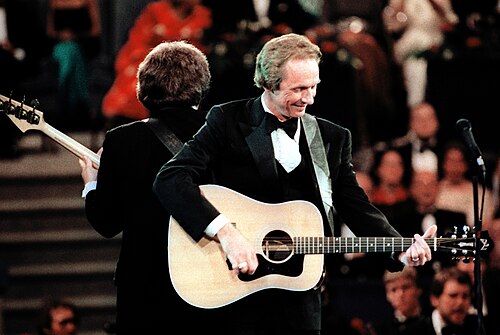
One night I stayed up way past bedtime to watch a comedian named Mel Tillis. He told jokes, he was funny.
There was, however, one thing that was different about him — he stuttered. Every sentence was a struggle. The words got caught in his throat before he could get them out.
And yet he didn't hide it, or apologize for it. The audience laughed with him, not at him.
Then, after the comedy, he sang.
And when he sang — the stutter was completely gone.
Every word came pouring out perfectly. Every syllable flowing like water.
No hesitation. No blocks. No stutter.
I thought,
Decades later, after spending my entire career studying the human voice, I finally understood exactly what was happening with Mel Tillis — and with millions of people who stutter.
And I built a system to fix it.
Nobody stutters when they sing. That is not a coincidence — it is a clue.
When you sing, your breath flows out of your body in a connected stream. There are no gaps between syllables. No stops between words. The air just flows. Musicologists have a word for this: legato. Smooth, connected, uninterrupted.
When you stutter, the opposite is happening. The air comes out in short, choppy, disconnected bursts. One word — stop. Another syllable — stop. Sometimes the air stops completely and your voice gets stuck trying to push any word out.
Musicians have a word for that too: staccato. Short. Detached. Interrupted.
Air stops between each syllable. Words collide with a closed throat.
Air flows continuously, carrying every word smoothly from start to end.
That is what is actually happening. Not broken thoughts. Not damaged neural pathways. Not anxiety.
You have Disrupted Airflow. That disrupted airflow is the real reason simple conversations feel like a test you can fail at any moment.
And once you understand that, everything changes. Because here is the truth nobody in the speech therapy world has been telling you:
I'm Roger Love. This is what decades of working with the world's greatest voices taught me.
I'm a vocal performance coach who's spent four decades working with the most demanding vocal situations on earth.
Tom Brady trusts me with the voice he uses to motivate millions of people.
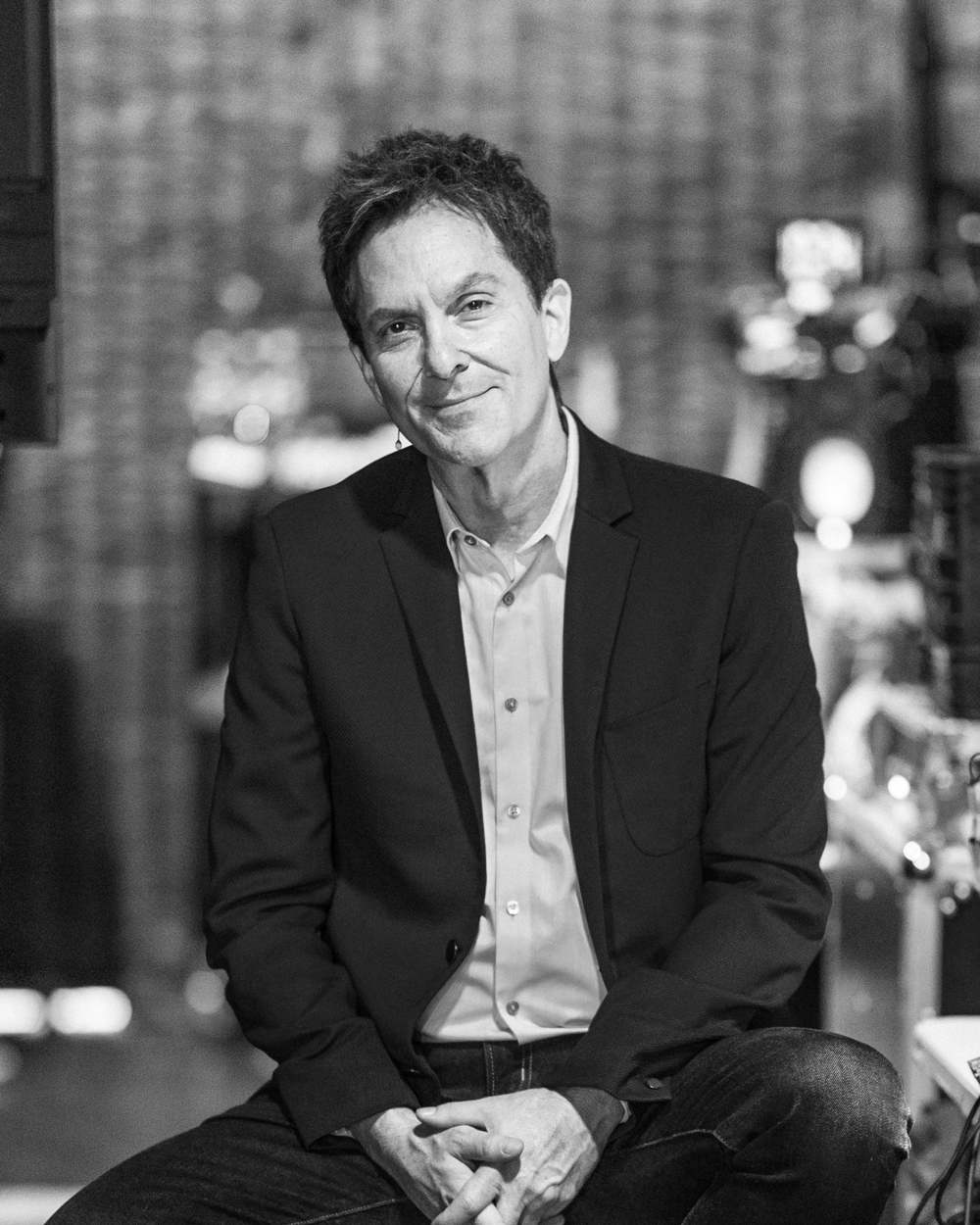
Reese Witherspoon. Bradley Cooper. John Mayer. Selena Gomez. Zoe Saldana. Jennifer Anniston.
When someone's voice is the most important asset they have — and they cannot afford to have it fail — they come to me.
Speech therapists are trained in pathology. Vocal coaches are trained in mechanics. That different perspective is exactly what let me see what others missed.
For years, I watched the speech therapy world approach stuttering from a different direction. They were trained to treat symptoms — to help you slow down, substitute difficult words, manage your anxiety. They tried to work around your stutter.
Nobody was fixing the airflow.
When I started applying vocal performance techniques to people who stuttered, what happened next became some of the most rewarding work of my career.
Before we go further, I want to say one thing about every program you've tried before this.
Years of speech therapy did not stick. That was never your fault — the training target was wrong.
Fluency-shaping, costal breathing, anxiety regulation, slow-speech drills. They each trained a different mechanism. None trained Solid Airflow as the core. That is why this is structurally different.

This is not just speech therapy. This is vocal performance training — the same methodology I've used for 40 years with the world's greatest voices, adapted specifically for stuttering.
Solid Airflow is a steady, continuous stream of breath that flows from your lungs, through an open throat, carrying your words smoothly from beginning to end. When your airflow is solid, your speech is smooth. When your airflow is choppy, your speech stutters.
Three things make Solid Airflow possible — and together, they remove the mechanical foundation that stuttering needs to exist.
Everything starts here. Most people breathe from their chest — shallow, inconsistent breaths that give the voice no foundation. Diaphragmatic breathing is how professional singers breathe. It creates the steady, unpressured airflow that carries speech smoothly from word to word. You will feel the difference the first time you do it correctly.
Fluent speech never stops between words. The air flows from word to word, only pausing at a comma or a period. The moment you let the airflow break mid-sentence — that's where the stutter lives. Connecting your speech means connecting your air, and that connection changes everything.
When we anticipate difficulty, tension rises and the airway narrows — creating exactly the resistance that turns smooth speech into blocked speech. Learning to release that tension and keep the airway open, even in high-pressure moments, removes the last barrier between you and fluent speech.
When these three pillars work together, stuttering loses its mechanical foundation.
It does not just get easier to manage. It goes away.
Seven videos. Short daily exercises. A completely new relationship with your voice.
The program is designed to go at your own pace. Watch each lesson as many times as you need. There is no finish line — just a new way of speaking that becomes more natural with every practice session.
Roger opens with the story of a comedian who stuttered on stage, then sang without a single hesitation. That moment contains everything you need to understand about what is really happening — and what is possible.
A complete reframe. Not neurological. Not psychological. Mechanical. Roger walks you through exactly why airflow is at the root of stuttering — and why this changes how the problem can be solved.
The foundational technique. Diaphragmatic breathing, step by step. Two exercises to start building the muscle memory: the Slow Leak and the "I Can If I Want" exercise. You will feel the difference immediately.
The airflow rule that changes everything: don't stop until you reach a comma or a period. Roger shows you how to connect your words, and why lengthening your vowels creates the steady air that fluent speech requires.
When your larynx rises with tension, it partially closes your airway. Roger teaches you exactly how to recognize this in real time, and gives you two techniques to bring the larynx back down — and open the throat immediately.
The three pillars of fluent speech, fully integrated. Roger speaks directly to both adults who stutter and parents of children who stutter — with specific, practical guidance for each. This is where everything clicks.
Your ongoing routine: morning breathing, daily vocal warmups, and a three-step check before any high-pressure speaking situation. The habits that make this permanent.
Included with the program. Audio tracks designed to be used three times per week. You listen, follow along, and imitate. No reading. No performance. Just your voice and Roger's, building muscle memory one session at a time. The more you practice, the more Solid Airflow becomes your default. Eventually, you do not have to think about it. Your voice just works.
If you are here for your child

First: thank you for being here.
The fact that you are reading this — looking for something better, trying to understand what is happening and how to help — that's a big deal. Your child is lucky to have you.
A few things I want you to know.
Your child's voice is not broken. It's not limited. They've learned a pattern of airflow that isn't serving them. And together, we can teach them a new one.
Love to Speak was designed for adults and parents both. Inside the program, I speak to you directly — as a parent — with specific guidance on how to practice these techniques with your child in a way that is encouraging, playful, and effective.
Children respond to this work differently than adults. They are often more adaptable, more open to play, faster to build new habits. The key is to make it fun. I'll show you exactly how.
The most powerful thing you can do in the moment of a stutter is to stay calm, maintain eye contact, and let them finish. Don't rush them. Don't fill in the blanks. Give them the message — with your body and your full attention — that what they have to say is worth waiting for.
What changes when the airflow changes
Real moments. Real voices. The same airflow.
The same technique. The same results.
When I teach the Solid Airflow method, the transformation is not theoretical.
For decades, I've watched it happen in real time — with Grammy-winning singers who needed to perform flawlessly in front of millions. With stage actors who had to deliver dialogue cleanly, night after night. And with everyday people who came to me struggling to finish a sentence and left with a voice they were proud of.

Your investment in Love to Speak
The complete system — three pillars, seven videos, and daily exercises:
- PILLAR 1 Solid Airflow Breathing the foundation of everything
- PILLAR 2 Connected Speech the airflow rule that removes the stutter
- PILLAR 3 Voice Freedom keeping the path clear under pressure
- ✓ 7 complete video lessons with Roger Love
- ✓ Daily Warmup Audio Exercises (listen and follow — no reading required)
- ✓ Immediate digital access — start today
- ✓ Lifetime access to all materials
Questions people ask before they start.
Love to Speak addresses the mechanical root cause of stuttering — not the severity level. Whether your stutter is mild or significant, the underlying airflow issue is the same. Results vary based on the individual and how consistently the exercises are practiced. This is a skill, and skills are built with repetition.
Most speech therapy approaches focus on managing symptoms — slowing your speech, substituting difficult words, reducing anxiety. Love to Speak works at the mechanical level, addressing the airflow pattern that creates the stutter in the first place. It is a completely different starting point and a completely different method.
Some students notice changes within days of consistent practice. For others it takes longer to build new muscle memory. Roger recommends daily practice — especially the morning warmup exercises — and practicing new techniques in low-stakes situations first. This is a skill, and skills are built with repetition.
Yes. Roger addresses parents directly inside the program and provides specific guidance on making the exercises engaging and appropriate for children. Many parents do the exercises alongside their child, which Roger encourages.
No. Just a device to watch the videos and access the audio exercises.
Because the speech therapy world and the vocal performance world have almost never crossed paths. Speech therapists are trained in pathology. Vocal coaches are trained in mechanics. Roger spent 40 years in vocal performance — and that different perspective is exactly what allowed him to see what others missed.
This is one of the most common questions — and one of the most important. Anxiety is real, and it does not disappear overnight. But here is what changes with Solid Airflow: you stop being dependent on a calm emotional state to speak fluently. Most stuttering approaches treat anxiety as the root cause and teach you to manage your nerves before you can speak. Love to Speak works differently. When the airflow mechanics are in place, you have a physical foundation that supports your voice even when anxiety rises. You may still feel nervous. But your airflow can stay solid regardless. The voice and the emotion stop being the same thing.
This is one of the most common stories I hear — and one of the most important to understand. What happened isn't that you stopped practicing or that you didn't try hard enough. It's that fluency-shaping programs train a stretched, drilled style of speech that requires constant conscious maintenance to hold.
The mechanism wasn't yours. You were renting it.
The follow-up research on those programs shows the same pattern again and again: results hold for months, sometimes a year or more, and then regress. That's not a discipline failure. It's the predicted outcome of the thing those programs trained.
Solid Airflow trains the access you already prove every time you sing. That access is in your body — you don't have to maintain it under tension, because it isn't being held up by tension in the first place. That's why it doesn't rebound the way fluency-shaping does.
Regression isn't a personal failure. A different mechanism produces a different ceiling.
It's a fair question, and there's some real overlap. Both McGuire and Solid Airflow take breathing seriously, and both go further than most speech therapy approaches.
But they're not the same mechanism. McGuire trains costal breath as a discipline applied to fluency-shaping — a controlled style of speaking you maintain consciously. Solid Airflow trains diaphragmatic breath as the foundation of legato airflow word to word, then adds two more pillars: Connected Speech and Voice Freedom. Those two pillars are specifically what remove the need for ongoing conscious control.
There's a practical difference too. McGuire is an in-person, multiple-thousand-dollar intensive that requires you to travel and immerse for days. Love to Speak is $147, fully digital, and self-paced.
If you've done McGuire and the fluency held — congratulations, you don't need this. If you did McGuire and the results faded, what Pillar 2 and Pillar 3 add is specifically the layer that helps the fluency stay yours.
The National Stuttering Association's acceptance work is real and it is important. For people whose primary suffering is shame about stuttering, it can be transformative. Nothing in Love to Speak contradicts that.
But acceptance work and fluency work answer different questions. Acceptance answers: can I be at peace with my voice as it is today? Solid Airflow answers: can I change how my voice actually works?
You can pursue both. You can love who you are and want your voice back — these are not the same statement, and they don't cancel each other out.
If your goal is to make peace with your stutter, the NSA community is the right place. If your goal is to speak more fluently — and you want to do that without rejecting who you are — that is what this program was built for.
Your voice is not broken.
It never was.
You have spent years working around your stutter. Choosing different words. Avoiding phone calls. Letting other people speak for you in moments that mattered.
You did all of that because nobody ever showed you what was actually happening — and what to do about it.
That changes today.
In seven videos and a set of daily exercises, you will learn exactly what professional performers have always known about the voice: that fluent speech is not a gift you are either born with or not.
It is a skill. Built from breath, from connection, from a throat that is open and free.
And it is waiting for you inside Love to Speak.
Every week you wait is another week of working around your stutter. Today can be the day you start retraining the airflow instead.